
Post & Wire Fences for Your Property
When you need to fence a lot of ground without a lot of cost, post and wire is hard to beat. It is the most economical way to mark a boundary across acreage, contain livestock, or keep deer and other wildlife out of a garden or crop, using sturdy posts strung with the right wire for the job. Sunrise Fence designs and builds post and wire fencing across Union County and the greater Charlotte area, braced and tensioned to stay tight through years of Piedmont weather. Whether you are enclosing pasture, running a property line through the woods, or protecting a large garden, we handle the whole job from first walk of the land to the final strainer.
Get Your Free Estimate
All fields Required
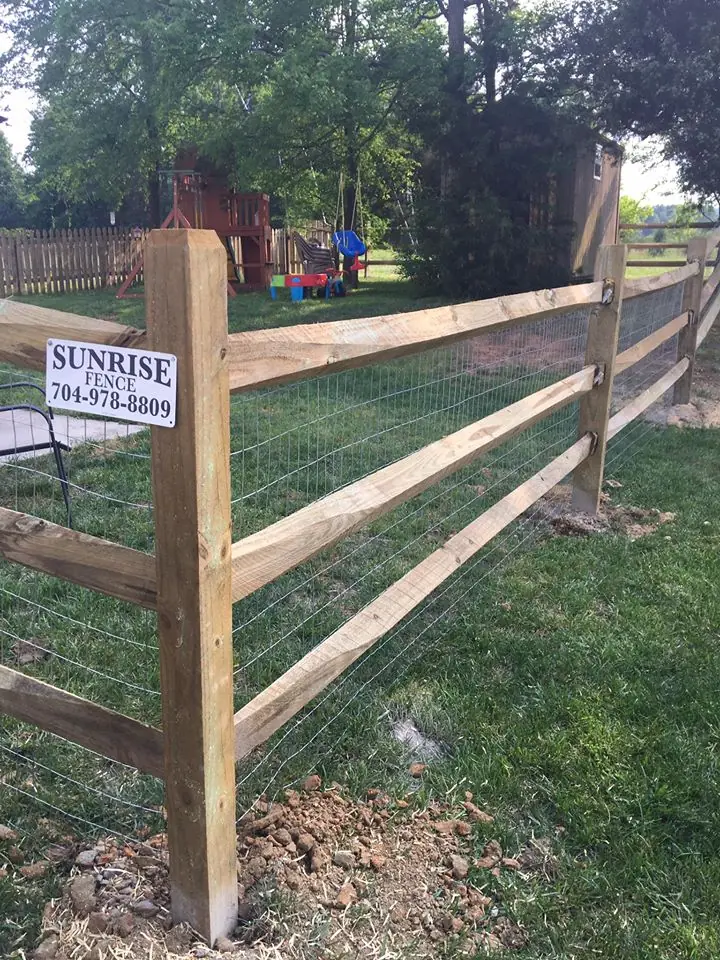
Affordable Fencing That Covers Ground
Post and wire fencing earns its place by doing a lot of work for a modest price per foot, which makes it the practical choice when the distances get long. Our work begins with an honest, itemized quote and a real walk of your property, because the terrain, the length of the run, and what you are keeping in or out all determine the right wire and the right post spacing. We are licensed and insured, and property owners keep choosing us because we get the fundamentals right, the parts you cannot see that decide whether a wire fence lasts: solidly braced corners, correctly tensioned wire, and posts set to hold the line across uneven ground. We also match the wire type to your purpose, since containing cattle, excluding deer, and marking a line are three different jobs. What you get is fencing built for your land and your budget, priced plainly, with nothing added later.
Post & Wire Options We Install
The right post and wire fence depends on what you are containing or excluding, and we install the full range:
- Field Fence (Woven Wire): The workhorse of rural fencing, a flexible woven grid that contains cattle, goats, and general livestock economically over long runs.
- Welded Wire: A rigid grid with clean square openings, good for gardens, smaller enclosures, and keeping pets in or critters out.
- High-Tensile Smooth Wire: Strong, long-lasting strands ideal for extended perimeter runs where distance and durability matter most.
- Barbed Wire: A traditional, low-cost choice for cattle and agricultural boundaries, not recommended for horses or where children and pets roam.
- Wood or Steel Posts and T-Posts: Set on wood line and corner posts for strength and looks, or on driven steel T-posts for economy, with braced corners either way.
- Top Rails and Gates: An optional wood or pipe top rail for added visibility and strength, plus walk and wide equipment gates to fit your access needs.
We match the wire, gauge, and posts to your livestock, your acreage, and your budget, and we walk you through the trade-offs between economy and longevity clearly so the quote makes sense. Throughout the project you always know where things stand, and because our crews come prepared for acreage work, we keep the run moving efficiently.
What You Get With Sunrise Post & Wire Fencing
Clear Pricing Over Every Foot
Tensioned and Braced to Stay Tight
The Right Wire for the Job
A Fence Line That Earns Its Keep
A well-built post and wire fence is a smart investment in your property, protecting your animals or crops, defining your land, and doing it for a fraction of what a solid fence would cost over the same distance. Getting it built right is what protects that value, and a little attention afterward keeps it working. The most common calls we get are from owners who paid too little for a fast install and spent the next year chasing loose, sagging wire and animals that slipped through the gaps. We would rather build it once, correctly, with the right wire for the purpose, corners braced to hold tension, and strands strained properly so the line stays tight through the seasons. Wire fencing does benefit from routine attention, and a quick pass along the line goes a long way. Catching a loosened strand, a leaning brace, or a sagging gate early keeps a small fix from becoming a full section rebuild. After every job we walk the finished fence with you, explain the simple upkeep your particular fence needs, and leave you a direct number to call if anything ever comes up. Built and maintained this way, a post and wire fence protects your land and your animals for many years.
Post & Wire Fencing Across the Area We Serve
Book Your Free Post & Wire Estimate
Request a Free Quote
What Customers Say
Post & Wire Fence Questions, Answered
Is post and wire the most affordable way to fence a large area?
For most large properties, yes. Wire fencing covers long distances at a much lower cost per foot than board, vinyl, or ornamental fencing, which is exactly why it dominates rural and agricultural use. High-tensile and field wire are the most economical for big perimeters. Because runs can be long, we walk the land, measure the real distance, and give you an itemized quote so you can plan around the true cost.
Which wire type should I choose?
It depends on what you are keeping in or out. Woven field fence is the go-to for cattle and general livestock, tighter mesh is better for goats and small animals, high-tensile smooth wire suits long perimeter runs, welded wire works well for gardens and small enclosures, and barbed wire is a low-cost option for cattle boundaries. We ask about your purpose first, then recommend the wire, gauge, and spacing that actually does the job.
Why do wire fences sag, and how do you prevent it?
Almost always it comes down to two things: weak corner bracing and wire that was never tensioned properly. If the corners cannot hold the pull of the run, or the wire was strung loose, it goes wavy and slack within a season. We build braced corner and end assemblies and tension the wire correctly, so the line stays tight for years rather than sagging.
Can post and wire fencing keep deer and wildlife out?
Yes, with the right height and mesh. Protecting gardens and crops from deer usually calls for a taller fence, since deer can clear a low one, and a tight mesh keeps smaller animals out too. Tell us what wildlife you are dealing with and we will spec a height and wire type suited to keeping it out.
How long does installation take, and do you remove old fencing?
Timing depends heavily on the distance and terrain, and we give you a realistic schedule in writing after walking the property. Wire runs go up efficiently once corners and bracing are set, since that groundwork is what the whole fence depends on. If we are replacing an existing fence, tear-out, cleanup, and responsible haul-away of the old wire and posts are included in the quote, with nothing extra at the end.